Monday, 8 February 2010

Palliative history,

Sunday evening television is traditionally deemed to be a time for comfort viewing - Lark Rise To Candleford, Midsummer Murders, Kingdom and Doc Martin. A reassuring and cozying taste of a Britain that never was and never is. 

The latest big historical project from the BBC - David Dimbleby's Seven Ages Of Britain fits very  comfortably into this slot. More appropriately titled 'Dimbleby looks at some old stuff' the series has shamelessly pinched its name from a Channel 4 series of a few years ago: 

The earlier series was proper history - looking behind the familiar British  landscape to reveal its man-made changes from the end of the hunter gatherers of the Mesolitihic to the enclosures of the Eighteenth Century. It reveled in the not immediately apparent; that the 'wildernesses' of Dartmoor and the Shetlands were once economically  thriving regions, that the quintessentially English countryside of fields and hedgerows is a comparatively recent artificial and highly poiliticised construct; and that the great forests were equally artificial proto-theme parks for the leisure class.

Dimbleby's series on the other hand reveled in restating the bleeding obvious. A middle ages that was all about knights and ladies, castles and chivalry. So Dimbleby  trots about looking for  examples of objects that confirmed that indeed this is what things looked like in 'days of yore'. And for some reason interviewing a present day Knight Of The Garter, a delusional retired major who seems to think he is a successor to the handpicked henchmen of Edward II. Or a sweet elderly couple who are equally delusional in thinking that they are just like Edward I and his queen Eleanor. 

Tellingly, Dimbleby's main focus was on Richard II and his role as patron of the medieval arts. Undeniably Richard was responsible for a lot of the nice things that Dimbleby clearly likes looking at, but significantly no mention was made that, by the standards of medieval kingship, he was a complete political disaster. He might have invented much of the courtly tradition that makes up the popular image of the middle ages but he failed in the main job of a monarch at that time - keeping a precarious balance of power with the  nobility on whom the entire fabric of feudal society rested. The political turmoil that resulted  from this failure was a factor in the peasants' revolt and  was then  expressed over a couple of generations as the Wars Of The Roses. Richard II's  failure ultimately resulted in his being held hostage in Pontefract Castle by these nobles - and  a decidedly unchivalrous  end when he was starved to death. But clearly this wasn't deemed a suitable thing to mention on a Sunday evening.

A better understanding of the period could probably have been had from watching the first series of Blackadder or Monty Python's Holy Grail. Terry Jones is at least a proper medieval scholar and showed his fundamental insight into those times with the immortal line 'he must be a king - he isn't covered in shit'...

Friday, 5 February 2010

Theocracy in practice

Ironic: My last post referred to a 'get out of jail card' for religious believers and then along comes a story about Cherie Blair in her capacity as a part-time judge giving a suspended sentence to Muslim Shamso Miah for breaking the jaw of a man in a queue-jumping argument -  on the grounds that 'You are a religious man and you know this is not acceptable behaviour'.

From the Islamophobes this will doubtless provoke an 'it's political correctness gone mad' bleating about special 'treatment' for Muslims. But for us Humanists  it throws up a couple of serious concerns. 

Presumably any atheist who has  received a harsher sentence for the same offence will now have grounds to appeal on the  grounds of discrimination. 

Most of all we again have to suffer the smugness of religious-types assuming that they hold the monopoly on a moral compass. That kind of thinking has a deep hold on society as a whole - how often do we  hear that  its said that churches or faith schools may preach some nonsense but at least they give  kids 'values' ?

Tuesday, 2 February 2010

The pope and the right to discriminate

I know it's an obvious gag but someone's got to make it: 

Apparently the Catholic Church is concerned that new employment equality legislation will stop them discriminating against gay, lesbian and transgender people when  appointing clergy and  lay staff -  funny I thought they had being doing some pioneering work in that field for centuries ...

But there is a serious side to this - the extent of Catholic bigotry is evident in the Pope's  denunciation of the legislation as violating 'natural law'. As happened with the adoption by gay couples issue, doubtless the church will claim some sort of special dispensation . 

To accept such an exemption would make a travesty of equality rights -  belief in the supernatural cannot be used as a get-out-of-jail-card: 'Sorry your holiness I thought you were just a common or garden  reactionary old bigot but as I see you claim divine inspiration for your discrimination that's a different matter altogether - carry on'.

Thursday, 28 January 2010

'You can't be neutral on a moving train'*

Howard Zinn died yesterday: Along with Christopher Hill and EP Thompson, he was one of the radical historians who inspired me to study history, and more importantly to convince me that history matters.

* I love this quote - which is also the title of his autobiography - it not only sums up the study of history it also sums up the place of the individual in the march of history and in society as a whole.

Although every inch the university professor; his experiences - growing up in a working class Jewish family in Brooklyn, working in the shipyards, serving as aircrew in the USAAF, and activism in the peace and civil rights movement - were far removed from the sterility of academia.  The story that he dismissed the last class he taught twenty minutes early so that his students could attend a picket line is a great epitaph.

His People's History Of The United States has become something of a standard text - which is a shame in the sense that this status tends to obscure its radicalism. His recent People's History Of American Empire - in graphic novel form - will hopefully have the same effect on a new generation. Take a look at this presentation taken from the book:


Wednesday, 27 January 2010

The Hoerengracht*

I slipped out to the National Gallery to have a look at 'The Sacred Made Real' exhibition of Spanish religious art. This wasn't some subliminal reversion to my Catholic roots. I just have a taste for that kind of gory-kitsch. Much as I have a taste for the slasher genre of b-movies. A lot of church art would equally merit the same label of 'torture porn'.

I found the exhibition had shut a few days previously - so ironically instead I had a look at 'The Hoerengracht'. This is an installation by Ed and Nancy Kienholz - although I prefer the more old-fashioned term 'tableaux' - grungily recreating a scene from Amsterdam's red light district in the 1980's with the prostitutes in their famous canal-side windows. The prostitutes are resin molds taken from real women, with the heads taken from fashion mannequins. Frames - like picture frames but actually taken from gift boxes - surround each of the models' heads. Apparently when constructing it the artists gave each model/dummy a name. It's every bit as disturbing, intriguing, sleazy and poignant as you'd expect...

* Hoerengracht means 'whore's canal' - the Dutch word for the red light district. Substitute one letter and you get 'gentlemen's canal' a fashionable and chic district close by. What a great language.


Tuesday, 26 January 2010

What is it about female hair ?

A French parliamentary commission has recommend a state ban of the Islamic burqua or full veil. It's a debate that will continue to rumble through the governments of western europe.

At a  pragmatic level even the better-informed Islamophobes see that state bans will produce the  opposite to the intended effect and strengthen funda-mentalism in minority communities.

Western liberals on the other hand are in danger of disappearing up their own relativist backsides in refusing  to address disturbing issues that they would never accept in their own culture.

Here's a thought though;  each of the images  here tells a story - and  these stories are not equally valid, they are equally fucked up. I could speculate at length on the cultural, historical and socio-economic origins of the customs portrayed, and the world-views they imply.

I think it is sufficient to simply say that they each reveal some profoundly twisted shit: About property relations, about the status of women, about suppressed sexuality ... and most of all about the unique and extraordinary power of religion to get people to connive in their own subordination.

Monday, 25 January 2010

Pen-knives: Criminality and craftsmanship.

I've carried a pocket knife since I was a kid. I think my granddad gave me my first - probably to mark the start of my very short-lived career in the Sea Scouts. Since then I should think that I have used my pocket knives pretty much every other day - for any task from eating at my desk to re-wiring my bikes at the side of the road.

Along with wearing a watch and carrying a wallet, I feel naked not to be carrying a pocket-knife.  And I think this was a common attitude for generations - part of a more innocent and 'real' culture - before we gave up trying to fix stuff for ourselves or became obsessed with health and safety.

Stabbing anyone - in self-defense or otherwise - has never been on my agenda but the recent anti-knife hysteria has criminalized  this habit and  most of my collection of pocket knives is now illegal. Generally because the blades can be locked - although this is actually a safety feature to prevent you cutting your own fingers off.

I have even had two perfectly legal knives  confiscated by the authorities - one a Swiss Army knife I happened to have on me at a carnival and another  I tried to take  on the EuroStar which they like to pretend is really an airplane - presumably  they were afraid I might hi-jack it and divert the train to crash in to a public building. (On the first occasion I was given a receipt by the police so the knife could be returned but some copper must have taken a fancy to it because it had been mysteriously 'lost' when i tried to reclaim it).

So I find myself for once strangely in sympathy with the gun-lobby - 'it's not pen-knives that kill people it's angry teenagers'. And I've been on  the look out for a nice pocket-knife that is also legal - essentially a folding blade that cannot be locked and has an edge of 3.5 inches or less.

Then I saw this article about Trevor Ablett who makes such knives - by hand in the same way as has been done in Sheffield for 150 years, and at the same price you can buy a mass-produced plastic item  in the shops. Too good to resist.

Wednesday, 20 January 2010

Chocolate wars make you sick

Looking at the media coverage of Kraft's takeover  of Cadburys, you'd think that they were turning Westminster Abbey into a McDonalds drive-thru. The press, not for the first time, are right for all the wrong reasons. When  it comes to big business there is no place for sentimentality.

Cadburys is not a struggling family firm of artisan chocolatiers - it is a huge (not quite as huge as Kraft) multinational that got big by swallowing up other household names like Frys, Bassetts, and most recently, Green and Blacks. It is not especially British either  - it operates in sixty countries and employs eight times the number of staff abroad that it does in the UK. Nor is it a more 'caring' business than any other - the days of the philanthropic Quaker Cadbury brothers building a 'new model' town for their workers and donating to the hardship fund of striking engineers are long gone.

The real reason that the Cadburys sell off is depressing is not sentimental at all, it is a salutary reminder that under capitalism the only moral imperative is to maximize the value of a business for the shareholders. As Todd Sitzer, the Caburys' executive who negotiated the £11.9 billion  sale said; he was sorry that there might be job losses but his ultimate duty was solely to his shareholders. Whilst trousering some £12million for himself in the process.

The two groups who don't figure in this equation are of course the Cadburys workers and the customers.

Much has been made of Cadbury's Somerdale factory being saved from closure by the takeover. We'll see. Multinationals like Kraft do not generally take over other multinationals in order to save jobs. Given the £7billion debt incurred by the deal for the already debt-heavy Kraft, it is not surprising that they have declared that they are looking to 'make significant savings'.

As for the consumer, the drive to cut costs, as it has in every  other sector, will only dilute quality - a process already under way when Cadburys started adding vegetable fats to their chocolate. I suspect this particular race to the bottom will only accelerate now; the new owners  already manufacture a variety of some of the most disgusting foods know to man ...


Monday, 18 January 2010

Aspirations ?

Today is Martin Luther King Day in the US. The commemoration of someone who articulated the hopes and dreams of so many seems like an apt time to reflect on the lack of inspiration from our current leaders.

Labour firmly nailed its electoral colours to the mast the other day when it apparently staked out (again) the middle classes and middle England as its natural constituency. After dabbling in past weeks with some class politics, in the 'Cameron-is-a-toff-shocker,' and then the 'maybe-class-is-now-more-important-than-race-revelation'; they have decided to fight the election on an 'aspirational' platform.

I hate their mis-appropriation of the word 'aspirational'.

Martin Luther King telling us that he had a dream is aspirational - wanting a bigger car, a bigger house, a plasma tv and a flashy holiday is not - it's just materialistically and socially ambitious.  Of course there's nothing wrong with that -  and the working class are just as entitled to want any of  these things as the middle class - but it does not constitute a political vision.

Or if it does, then it is a euphemism for a  mean-spirited individualist vision where inevitably 'better'  means not better than you have now, but better than the family next door. It's tempting to call  it post-Thatcherism but it is much older than that - Guizot's 'enrichez-vous' rallying call to the wannabe middle class pre-dates the 'Essex man' phenomenon by a century. Then as now it  wasn't about getting 'on', but getting 'above'.

There's no problem with being aspirational but how about aspiring to something a bit more worthy as the grandiose vision of a political party ?  A decent education for all, the very best free health care from cradle to grave,  proper and affordable housing, real jobs and careers for young people, and dignity and care for the elderly. Just for starters.

Ambitions that are a  bit less like  Guizot (and Thatcher, and Blair) and a bit more like  Scottish Socialist John Maclean 'rising with our class not above it'.

Thursday, 14 January 2010

Haiti - apparently Jesus hates black self-emancipation & anti-imperialism


Yes you heard that right from the mouth of former Republican candidate, TV evangelist and general bigoted fuck-wit Pat Robertson: God has punished Haiti with an earthquake because two hundred years ago they made a pact with the devil when fighting against French colonialism and slavery.

Apart from a seriously sick and fucked-up twist on divine vengeance and human suffering Robertson displays an unsurprising lack of historical knowledge around Toussaint L'Ouverture and his inspirational struggle for freedom: This was waged not as he seems to think against Napoleon III, but sixty years earlier against the distinctly 'un-godly' Jacobins of the French Republic. He's also a bit confused as to why Haiti and the Dominican Republic are two separate countries. (I suspect though he was trying to make some reference to Voodoo - but who knows ... or even cares). Cunt.

For a rather saner and more compassionate analysis of the tragic situation in Haiti, have a look at this piece over at Socialist World. Disasters such as this tend to be presented as being 'above politics' - but politics are at the heart of the suffering. I suggest you read the piece to understand the context - and then do something practical to help the situation by donating here.


Monday, 11 January 2010

Our Silver Non-Wedding

Today it's the 25th anniversary of  Mrs Journeyman and myself not actually being married.

The more Catholic part of my family have done some mental acrobatics to pretend that we've been married all along - as if having had a wedding that they weren't invited to is the lesser of two evils in comparison to having 'lived in sin' for all this time.

Catholicism taught me that marriage was a 'sacrament' - just like holy orders and the last rites. So my reaction to my religious upbringing was  a major factor for me in choosing not to get married.

Another was the history of the institution of marriage: It only really caught on with the  establishment of Western Capitalism, property rights, and the ruling class forcing their own social conventions  into the private lives of the rest of us.  Before then, for those of us who weren't property owners there was a much more flexible attitude to marriage -  without  estates and  inheritances to worry  about - official 'legitimization'  didn't matter that much.

Trial periods of pre-marriage co-habitation were accepted, and many of the poorer sections of society simply couldn't afford to marry. In fact even the medieval Catholic Church recognised 'de-facto marriages' without a wedding ceremony. All  this is is the origin of the modern misnomer of the 'common law' marriage - before it was decided that everything had to be done by the statute book - and officially recorded.

And personally I just had a natural  reaction that my love life was none of the state's business . I think this was a pretty common attitude amongst those of us who grew up post the 1960's social revolution. It was Thatcher's children growing up on Posh & Becks and the  OK magazine wedding phenomenon that revived marriage amongst a younger generation.

This week just  one look at  the vocal pro-marriage lobby is enough to confirm my opinion: Whether it's Cameron promising to bribe us with tax breaks to bring back Tory family values or the exposure of the hateful and  hypocritical  First Minister and First Lady of Northern Ireland - the Robinsons.

I prefer to take Bob Dylan as my guide: ' 'to live outside the law you need to be honest'. I'm grateful for what we have - it seems to work - and bollocks to the inland revenue.


Friday, 8 January 2010

Fashion for bikers (yes really)

Given that my eldest daughter recently described my dress sense as that of a 'homeless hillbilly' I may be an unlikely person to blog on anything remotely to do with fashion.

Much as we would hate to admit it - bikers - like any other sub-culture have a dress code. And it changes over time so you could call it fashion. For example when I started out back in the 80's mullet haircuts, leather jeans with thong-lacing down the side and tassel-fringe jackets were perfectly acceptable - nowadays they are definitely not. And much as we would like to claim that it's all about function not form - it isn't - otherwise we'd all go around dressed like couriers in sensible day-glo armoured  jackets and rubber derry-boots.

Personally I like vintage things -  planes, trains, automobiles, books, watches, furniture, buildings  - and bikes. And I like vintage-ish clothes.  In  biking terms this tend to mean  anything that is practical for motorcycling but isn't actually purpose-made for motorcycling: Traditional work boots, dark jeans, plaid shirts and a variety of jackets. Leather, canvas, cotton, wool - not  nylon, gortex or plastic. Throw in some old-school accessories, like chain-wallets and bandannas and, however much it might be embarrassing  to admit, we have a distinct look.

I like to think that there is something  serious underlying this  general vintage thing ; a  harking back to a more innocent  age of craftsmanship when things were built to a standard rather than a price. Maybe it's a subconscious rejection of a throwaway consumer culture. In specific biking  terms an age  when motorcycling was an everyday activity done in everyday clothes not a 'leisure activity' that you had to dress up specially for.

Or maybe it's just because it looks cool.

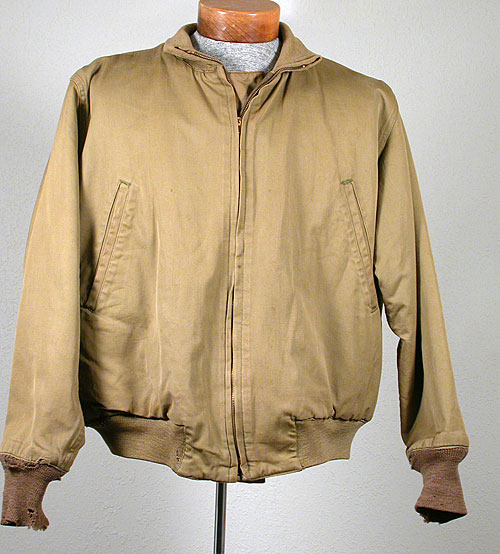
Anyway I've had a quest for the ultimate vintage jacket for a while. Now thanks to ebay I've got an A2 flying jacket, a Schott leather jacket, a replica tankers' jacket and an original US navy deck jacket. I've decided that my preference is with the last one - which I got a few weeks ago - it's warm, almost waterproof and just about knackered enough. The only thing is that it's slightly too snug a fit over a big jumper.

So I have just extravagantly brought another slightly larger one on ebay - for £15. I'm happy  - but the rest of the family think I'm bonkers. 

(Disclaimer: Sadly I  look nothing  like Paul Newman shown wearing the same jacket).

Monday, 4 January 2010

New Year Dishonours

When sad old aging rockers /variety acts - like Rick Parfitt and Francis Rossi of Status Quo  - are included in the New Years' Honours List then it is easy to dismiss the whole thing as  farcical and comic. At worst yet another instance of our antiquated state - quaint if increasingly irrelevant.

But when Cressida Dick is included - the senior police officer in charge of the Charles De Menizes shooting scandal - there is something downright fucking outrageous going on. The inquiry may have exonerated her from criminal responsibility but it still found that the whole operation was mismanaged - so it is difficult to see in what possible sense an award could be merited.

In fact it is impossible to conclude that this is anything other than the state sticking two fingers up at its critics - in the most insensitive and offensive way it can.

It's ironic that the concept of 'honours' is involved at all: If 'honour' had played any part then Dick should have very publicly  fallen on her sword (or possibly truncheon ?) - even now she could have  quietly declined the award. The front-line CO19 officer  tasked with pulling the trigger at least had the decency to break down whilst giving evidence at the inquiry. Meanwhile Dick who directed the operation from the safety of a command room merely tried to worm her way out of  responsibility ... for which she now has the Queens Police Medal.

Wednesday, 30 December 2009

Ip Man and martial arts mythology

I saw the Ip Man movie the other night. Strangely I've never been a great fan of the kung fun movies genre but I found it fairly entertaining and true to the underlying myth if not the historical reality of the grandmaster of my branch of Wing Chun.

But in fact as history goes it is very much of the 'Braveheart school'. Both in the liberties taken with the narrative and in the portrayal of Ip Man as a kind of Chinese William Wallace.

It did get me thinking though about the whole question of mythology in martial arts. So much of this comes from the idea of an inspired individual 'inventing' a system or a style. Common sense, and my own experience as a historian, would suggest that this has to be nonsense.

It's a classic case of parallel development: We see all over the world, in all sorts of different societies, in different periods, the evolution of martial arts. Despite an incredible variety of traditions, nuances and idiosyncrasies they are in fact remarkably similar. This is  maybe not so surprising given the limited nature of the human armoury. Most of us are equipped with the same number of limbs, hands and feet  and there's a finite number of permutations of striking and grappling.This is born out when you look at any martial art in a practical fighting situation -  they all start to look increasing similar despite having possibly very different stylised training methods. And interestingly the more experienced the practitioner the less rigidly stylised he is and the greater the apparent convergence with other styles. Based on my own experience - in Wing Chun - in  the 'last' form Bil Jee, the principles of the previous two forms are largely discarded - it's been described as  learning how to break the 'rules'.

I have to think that martial arts are the product of a sophisticated process of collective evolution over a very long period.  They are not delivered complete by a single inspired individual - whether that individual is an itinerant holy man in the fifth century, a sixteenth century Buddhist nun  or an exceptional teacher at the time of the Sino-Japanese war.

On top of this general observation, when it comes to Wing Chun history it is doubly  difficult to sort the facts from the legend because of its underground nature . Underground because of its association  with the nationalist resistance movements  opposed to the Quing dynasty. Other styles - Japanese and Korean -  carry there own nationalist and political baggage which creates a mythology that obscures their true development.

But we can be sure that in a highly stratified and static environment such as Imperial China the propagators of the system would have to be  individuals on the margins of peasant / village society who had the freedom to travel the country. People who could  spread influence - and be influenced - wherever they went. This would seem to provide the historic basis for the legends of monks, nuns and the Red Junk Opera .

I'm sorry if any of this is heresy to any of my Wing Chun brothers but our martial arts ancestors   were clever and dedicated practitioners - seekers after the elusive perfection of technique - and truth. Enjoy the myths and traditions by all means but we  do  our respected ancestors  an injustice if we elevate these myths to a quasi-religious cult.

Tuesday, 22 December 2009

Tom Wintringham

A sad aspect of the fragmentation of the Left, apart from blatant sectarianism, is an ignorance of the historical contributions made by people from different political traditions. So until reading the Last English Revolutionary, I knew next to nothing about Tom Wintringham. I found something very appealing about him – a Marxist theoretician (and practitioner) of guerrilla warfare with the appearance of an absent-minded academic. That he was also a keen motorcyclist and admirer of the English radical tradition dating from the Levellers also helped.

Not so long ago I would probably have dismissed him as just another Stalinist. In fact having been expelled from the Communist Party in 1938 he was also airbrushed out of their historical pantheon. However he remained a Marxist all his life and so was never accepted into the Labour mainstream. As a result he falls between a number of Left traditions and remains a relatively obscure figure.

A brief biography should show that he deserves to be better known: Born into privilege, he served in the ranks in the Great War as a dispatch rider. This radicalised him and he was imprisoned for mutiny. After the war as a student he visited Bolshevik Russia and was one of the founding members of the Communist Party of Great Britain. Along with a number of leading Communists he was imprisoned for sedition in the run up to the General Strike of 1926. He went to Spain and became involved in the raising of the International Brigades, and later went on to command the British Battalion. Twice wounded in action he was invalided back to Britain, but clashed with the Communist leadership and was expelled from the party. At the outbreak of war he threw himself into the war effort under the slogan of ‘a people’s war for a people’s peace’. He was a pioneer of the Home Guard and with other Spanish Republican veterans set up a school of guerrilla warfare. He opposed the wartime electoral truce and set up the Common Wealth Party. After the 1945 election he joined the Labour Party and was involved in the peace movement until he died in 1949.

At one time various organisations used to talk about ‘unconscious Trotskyists’ – it was a way of laying claim to individuals and other organisations who probably wouldn’t be seen dead with them – a bit like Mormons retrospectively converting their ancestors. Despite the grounds given on his expulsion from the CPGB – that he had consorted with a ‘Trotskyist agent’ - Tom Wintringham certainly wasn’t a Trotskyist unconscious or otherwise.

He was however a serial womaniser, and the paranoid CP leadership distrusted his affair with Kitty Bowler, a wealthy American woman with general left sympathies. Wintringham was given an ultimatum to choose between her and the party and he chose her. But nonetheless there was also a political basis for the expulsion - unlike much of the CP, Wintringham genuinely believed in the Popular Front.

He had recoiled from the insane sectarianism of the CP’s ‘class against class’ strategy which saw other left parties as the main threat rather than the Right - a strategy that was undoubtedly instrumental in allowing the Fascists to come to power. In Spain he developed his idea of a people’s war, and a broad alliance that would take in all working class organisations along with ‘genuine democrats’ from the middle class. How much he knew of  the CP’s  suppression of other Lefts – the POUM and anarchists in Catalonia – is debatable, but he was appalled at the cynical sectarianism of the CP in Spain.

Most of all he was outraged at the CP’s endorsement of the Nazi-Soviet pact, which he regarded as a betrayal of the anti-fascist cause. It was this that drove his vision of ‘people’s war’, with the Home Guard not as the comic version of Dads’ Army and Captain Mainwaring but as a highly politicised militia based on factory workers such as the union militias of Spain or the partisan bands on the Eastern Front.

The Common Wealth Party was at the same time both a bizarre postscript to his political development and also its culmination. It was an odd alliance of Lefts discontented at Labour’s acquiescence to the wartime coalition and assorted oddballs such as the Christian socialists seeking a ‘moral revolution’. It also expressed Wintringham’s vision of a Popular Front that had a peculiarly English slant - even the choice of name revealed his vision of radical continuity going back to the seventeenth century.

Wintringham died in 1949 not long outliving the 1945 Labour landslide, after which he advocated the folding of Common Wealth into the Labour Party. Until his death he remained an eccentric and marginalised figure on the Left seeking inspiration from the regimes in China and Yugoslavia as alternatives to what he saw as an increasingly discredited Soviet Union, although he could still never quite bring himself to condemn Stalinism.

With the benefit of historical hindsight it’s very easy to condemn Wintringham’s failure to break with Stalinism. But it’s also easy to underestimate the magnetic pull that the first worker’s government had to those on the Left in the 1920’s and its ability to command continuing loyalty in the face of the rise of Fascism in the 1930’s. For people who supposedly believe that 'conditions determine consciousness' we Marxists are too often hyper-critical of people from the past who didn't arrive at a 'correct' position. I find this particularly distasteful when applied to individuals who have risked and endured far more than their critics.

It’s not necessary to have a party list of approved historical characters or to try and retrospectively appropriate   them to our own cause.  It's should be enough that we recognise them honestly.

Monday, 21 December 2009

Who brings a gun to a snowball fight ?

Humourless pricks with the authority of a badge and some sort of inadequacy complex are always depressing. Give them a gun too and they are  downright dangerous. Check this footage from a snowball fight in Washington DC.

And when you can be arrested and detained for taking a photograph of a public building or  trying to film the numbers on a copper's uniform  - there are no grounds to feel smug that it couldn't happen here ...


Friday, 18 December 2009

Some eye candy

I'm a bit bored and uninspired to write at the moment: So I just dug out some classic black and white photos - they all represent something (to me) so maybe they qualify as 'iconic'. They don't really need explanations but here they are anyway:

• Lee Marvin defined  biker culture in 1953 - it's not really changed.


• Trotsky reading the Militant. He looks  like my dad in this picture.


 • Michael Parks as Bronson. Two wheedled knight errant on a quest.


• Girl On A Motorcycle. French art-house. A girl on a bike. Nuff said.


• My Sigung: Wong Shun Leung. The bad boy of 1950's Hong Kong.


• Miners' strike 1984-5. A defining moment of my  youth.


• Easyrider. I always identify more with Billy than Wyatt.


• Steve McQueen. Simply the coolest movie star. Ever.


• Teamsters' strike 1934. For once the cops are on the receiving end.


• And finally, because I just couldn't not include this.


Thursday, 17 December 2009

We want the airwaves ...

Fight back against the forces of darkness and sign up here to get Rage Against The Machine to a Christmas Number One instead of Simon Cowell's latest product - And stop the onslaught  of cynical-plastic-manufactured-commercial-sentimental-manipulative  shite. At least for a week or two...


Monday, 14 December 2009

Tiger Woods

I grew up in the suburbs surrounded by golf courses. As a teenager I did a bit of caddying and I played  a bit of golf. Surprisingly I wasn't too bad but it was not really the game for me - I prefer my exercise a bit more vigorous.

But it wasn't this that really put me off, it was the arseholes who are magnetically drawn to golf clubs. The kind of aspirational twats who enjoy being part of an organisation that tells them they musn't wear shorts on the course or that they have to wear a collar in the bar  - and that after twenty years of kissing arse they can become the club captain. And then I found in work that golf was a social forum for 'business' - which really meant a vehicle for brown-nosing with clients or superiors. So I avoided golf much as I also avoided the freemasons and the rotary club - and haven't found my career disadvantaged.

So I'm not big on golf or golfers and I haven't followed closely, or particularly cared much, about the Tiger Woods scandal. But I can offer a couple of observations without straying into the morality of his infidelities:

Firstly I suspect that they are more about power than they are about sex. Celebrities are the new royalty - of the worst 'divine right' kind. Such is the cult that surrounds them that they feel, and most of the time the media and public go along with this, that they are above the constraints of the great unwashed. The feeling that they can shag every gold-digger that makes herself (or maybe himself ?) available becomes not only a privilege but a defining quality; and consequently almost a necessity of celebrity. It's the same sense of 'droit de seigneur' that drives pissed up footballers to pick fights in Cheshire night clubs - or worse.

And secondly, and specifically with the Tiger Woods case, there is more than a hint of racism. The underlying  feeling that black celebrities have by their very definition 'got above themselves'. Particularly so if they have conquered a WASP  bastion such as the golfing world. Particularly so if they have a glamorous  and conspicuously aryan wife. There will always be the 'OJ Simpson' factor' - the facts of the case secondary to the white establishment's delight at seeing an 'uppity' black man fail.

That's it - I promise I will never mention golf here again.

Friday, 11 December 2009

Then Came Bronson


I'm just a bit too young to have seen this first time around in 1969 - but I'm trying to catch up on 'Then Came Bronson'. They don't make shows ... or bikes ... likes this any more.

Love it:
Taking at trip ?
Yeah
Where to ?
Wherever I end I up I guess ..
Boy I wish I was you
Well hang in there ...

Tuesday, 8 December 2009

Afghanistan and the reason why*

News that the 100th British soldier has been killed in Afghanistan this year. Defence Secretary Bob Ainsworth has cautioned us not to become distracted by the casualty rate and to concentrate on the progress 'we' have made in Afghanistan: Personally I find this far more callous than any gripes about Gordon Brown's handwriting but we will let that pass for a moment and have a look at the balance sheet:

• After two dodgy elections the people have the corrupt Karazai government

• Probably linked to this, 40% of the promised Western aid has not reached the people it was intended for.

• 77% of the population do not have access to clean water.

• In rural areas 80% of the population do not have electricity.

It is tempting to conclude that the US and British governments simply don't have a fucking clue as to what the objectives are. But that actually lets them off the hook too lightly - the strategy is both knowing and cynical.( And forget the blustering humanitarian fig leaf, by that logic British troops would be dying in Darfur).

The allies  may have gone into Afghanistan to fight Al Quaida but couldn't find them so ended up fighting the Taliban instead - but there was some grand strategic vision too. A grandiose idea of retaining influence in a zone that, judging from instability in Pakistan, was rapidly slipping away from their control. A zone of immense productive importance to them - the oilfields of the Middle East - at which the otherwise desolate region of Afghanistan stands at the gates. And of course the country also sits on top of a strategic pipeline. This is nothing more than good old fashioned imperialism.

Anyone with a passing knowledge of colonial history, or even of the Flashman novels, will know that this is nothing new. In the Nineteenth Century the competing superpowers were Britain and Russian, and it wasn't about about protecting oil fields but trade routes - again Afghanistan had the misfortune to be in exactly the wrong place. The struggle then was played with rather more sophistication, as a war of espionage, diplomacy and outright bribery of local factions. When direct military intervention was required the Western forces invariably got their arses royally kicked by local forces.

From a military point of view the current strategy is that of every imperialist power since the Romans - control key towns and strong-points and police the surrounding countryside by patrols. And from the Teutoburg Forest to Dien Bien Phu or most appropriately the 'North West Frontier' it hasn't worked. In the long run, time, logistics and geography are not on the side of empires. And neither usually is justice.

* 'Theirs not to reason why, Theirs but to do & die' -
Alfred Lord Tennyson - 'The Charge Of The Light Brigade'

Monday, 7 December 2009

Other days remembered 'in infamy'


In the US, today marks the start of the Second World War in 1941 with the anniversary of Pearl Harbour.  For us Brits it’s the 3rd of September when, in 1939 Britain declared war following the Nazi invasion of Poland. In Russia the same anniversary would be marked on 22nd June 1941 when Hitler launched Operation Barbarossa on the Soviet Union. 

By convention and convenience the Second War is dated 1939-45. But this is a selective chronology on the worldwide struggle against Fascism – it is also a view through a specifically European lens: In 1935 Mussolini’s Italy invaded Ethiopia. In 1936’s Franco led a revolt of Spanish colonial troops in Morocco that would escalate into civil war. And in 1931 Imperial Japan invaded Chinese Manchuria.

This week in 1937 marks the fall of the Chinese city of Nanking and the start of a six week period of atrocities against surrendered troops and the civilian  population that resulted in  over 250,000 deaths and untold instances of rape and other war crimes.

 Outside of Asian communities, this ‘other genocide’ is still largely unknown in the West. Partly because the telling of the story is clouded with the propaganda of Communist China: Partly because the Japanese authorities were not as bureaucratic as their Nazi counterparts in documenting their crimes; partly because certain Japanese nationalists have, like Western Neo-Nazis, attempted to use historical revisionism to diminish and ultimately deny these crimes. But mostly I suspect that these crimes are unknown – and those in Nanking were representative of those of Imperial Japanese Forces throughout Asia – because the evidence was not right under Western noses, and because they did not affect ‘people like us’.

Ten years ago a Chinese-American, Iris Chang, wrote ‘The Rape Of Nanking’ and did in some part redress this. The book is frankly not good history. Revisionist historians have found it rather too easy to pick holes in her reliance on some questionable secondary sources. In its analysis it strays into a Chinese nationalism that sees the Japanese atrocities of the period as the inevitable by-product of a national character exemplified by the bushido code. It is uncomfortable and shocking reading told from an undeniably partisan point of view- to the extent that after writing it the author suffered depression and finally took her own life in 2004. Even so the book still justifies compulsory reading for any Westerner trying to understand the period. And much of the revisionist criticism amount to  nothing less than a nationalist-fueled blanket denial of the crimes - on a scale that no Western historian would dare suggest in relation to the Holocaust.


If nothing else it explains why in all those cheesy kung-fu movies, the karate guys are always depicted as the villains …

Wednesday, 2 December 2009

Real world interlude.

A momentary change from the general smart-arsery and occasional bile that is the usual tone of this blog:

Back in the Spring I had a health scare that sent me a warning shot of mortality  - this weekend I had a similar experience with dad. He's in his 80's, increasing frail and until now the sole carer for my mum who is effectively house-bound. I got a phone call on Friday from the ambulance service to say that they were taking him into hospital as he had become confused and lost his memory. So I had a manic ride across London through the rush hour down to Kent to check that my mum was with a neighbour, and then on to the hospital.

There I found my dad, who until very recently was a local councillor, school governor and leading light in the local Labour Party, utterly disorientated and just about able to recognise me.

He had lost all recollection of where he was and what he was doing and could only just about recall his own date of birth and what he had done for a living before retiring. A stroke was suspected but then dismissed. In the course of four or five agonising hours in the A&E department, whilst he waited admission to a ward, he was given medication to lower his blood pressure. As this happened his memory and awareness gradually returned. I went back to my parents' house to check on my mum and just after midnight we had a ominous phone call. Answering with trepidation  - it was my dad's more or less normal voice speaking - more or less lucidly. I returned to the hospital the next morning to find him sat up in bed reading the Independent and talking about the news.

Having got him home, it was apparent that things cannot continue as before. So from having no support at all in looking after my mum, he now has a package from social services. I stayed with them until this support kicked-in. It's not really much more than a safety net but it will hopefully give him the all-important psychological reassurance that the burden is not solely on his shoulders.

Again, as with my own very similar experience, I am struck by the fragility of life and 'self'. Those things that define us as a person hang by such a thin thread. I'm also struck by the underlying sadness of old age - the knowledge that our world and its horizons will slowly close in around us so that planning a journey upstairs or cooking lunch becomes a major pre-occupation. I am disgusted with my  selfish panic of 'how the fuck am I going to cope with this from now on?' And I'm also struck, despite all the frustrations and delays, by the fundamental kindness of everyone in the caring professions from doctors to home-helps - and  I find it humbling and sobering in comparison with the fundamentally vacuous nature of  my own working life.

That's about it I'm afraid. Nothing original, insightful or witty to say. But at the same time not to record my feelings here on my blog would somehow seem dis-honest. I promise normal service will soon be resumed.

Friday, 27 November 2009

William Blake, Jesus and the druids

I have a soft spot for William Blake. His art is visionary and timeless. His politics were radical. And he started life as a copper-plate engraver and so would have been a member of my old union the NGA (SLADE). I'm not so sure about his poetry though. And although I have to concede that 'Jerusalem' would be a preferable national anthem to 'god-save-the sodding-queen'- it is of course complete nonsense.

Whilst I can appreciate the radical intention behind the lyrics - a vision of building an earthly paradise in 'England's green and pleasant land'; the only possible answer to 'Did those feet in Ancient Times?' is ... NO!!! However this view is not accepted by Dr Gordon Strachan, a Church Of Scotland Minister who has made a film to re-assert the old legend that Jesus did visit Britain.

The myth is an old chestnut that has been around for generations, and does  have some flimsy connection to recent archaeolgy. We now know that Britain at the time of Jesus , particularly in the South West,  was not some desolate outpost but a vibrant trading economy with trade routes that connected across the Mediterranean to the Levant. But that's about it. Mixed up with this is the legend of Joseph of Arimathea having deposited the chalice from the last supper (AKA The Holy Grail) at Glastonbury. From there on of course it is only a few short steps to the whole Arthurian circus - and Dan Brown.

But more mundanely. Joseph may have been a merchant and  he may have been Jesus's uncle - and so this leads to the speculation that he may have taken  his nephew with him on his trading  trips. All a bit thin but there is at least some semblance of tenuous logic to it. However apparently Dr Strachan is not content with the idea that Jesus may have tagged along with his uncle to pick up some Cornish tin or lead: He argues that Jesus visited the druids of Britain to swap philosophical concepts !

Ignore for a moment the improbability of an almost certainly illiterate carpenter from a small town in Palestine who probably only spoke Aramaic discoursing with celtic-speaking elders who themselves had no written language.

Not too much is known about the druids, but we can be pretty sure that their pagan belief system was simply not the kind of religion given to the calm ecumenical debate of metaphysical concepts. Travellers would  not have visited them for enlightenment like gap-year students going to see ghurus in Goa to find themselves. They would have been rather more likely to find themselves sacrificed and their heads stuck on display on the door of the chief druid's hut. Still, no matter what the implausibility, there is no end to the wishful thinking of religious believers.

I'm just waiting for someone to sign up Dr Strachan's theory for Hollywood - it can't be any worse than the fucking Da Vinci code.

Thursday, 26 November 2009

'Rights for Whites' exposed

This clip* makes the challenge to the Big Lie that lies at the bottom of all forms of racism. It's got a US angle to it of course with references to slavery and the civil war, but it's a spot-on summary of the age old divide-and-rule trap that comes up every time race or immigration is mentioned. Take the ten minutes to watch it now.

Going back to that Question Time debate: I don't know much about Tim Wise or his politics but I'd have loved to see him give it to Nick Griffin with both barrels.

* By the way I found the clip on Kurt Sutter's blog - the creator of  Sons Of Anarchy. I've raved about the show here before - although not primarily for political reasons - but if you had any assumptions about bikers and rednecks you might be surprised that the fictional MC's main enemies at the moment are a couple of white nationalist organisations. And Kurt himself is proof that liberals come in all shapes and sizes ...


Wednesday, 25 November 2009

Bollock-speak from Labour's new prince.

I found this quote in a piece on  The Guardian website  about David Milliband -  heir-apparent to the New Labour leadership ;

"You can't stand for empowerment unless you are an egalitarian. That's the platform we then use to stand up for a strategic role of government, but also stand for decentralisation. We stand up for social mobility, and we see public service reform as critical to that, and welfare reform. We stand up for the diversity of Britain, but we know it has to be founded on strong rights and responsibilities. And, very importantly, although there's no point in pretending it's popular, you have to stand up for internationalism, and you have to stand up for the need to share power in Europe, to be influential in the world. That's basically my pitch."

???!!!??? - Meaningless and utter bollocks.

It's may only be a small example, but this sound-bite  also sums up everything that is wrong with the Labour Party : Ozzing smugness and now so utterly divorced from its working class and socialist roots that it  can only expresses itself in the bland corporate tones of a 'vision statement' - and a not very well written one at that.

In unintentional irony the Guardian positions the story next to a piece about a middle class Christian voluntary social worker who has chosen to live on an estate in Peckham and will stand against Harriet Harman in the next election as the Tory candidate. Maybe the guy is just a well intentioned eccentric with muddled ideas. But I can't help thinking that this kind of perverse thinking is made possible by the bankruptcy of ideas from Labour, the vacuum  this has created, and the lack of a pole of attraction for anyone who wants radical change.

And you can be sure that  Nick Griffin and the BNP are rubbing their hands every time they hear this kind of bullshit from the 'liberal elite'.

Friday, 20 November 2009

Rock and Roll Irony

I'm sat in work at my desk eating my lunch. I click on the BBC News site and see that Susan Boyle's new album (!?!) has become Amazon's biggest ever pre-ordered CD...

At the exact same time the i-tunes on my mac are  set to 'shuffle' and the Ramones' 'Rock and Roll Radio' comes on.

'Britain's Got Talent' ???   FUCKING  HELL !!!

Joey Ramone still puts it best:

Do you remember lying in bed
With your covers pulled up over your head?
Radio playin' so no one can see
We need change, we need it fast
Before rock's just part of the past
'Cause lately it all sounds the same to me
Oh oh oh oh, oh oh

Will you remember Jerry Lee,
John Lennon, T. Rex and OI Moulty?
It's the end, the end of the 70's
It's the end, the end of the century


Wednesday, 18 November 2009

Patriotic bike pin-ups ?

Retro bikes. Retro pin-ups.  What's not to like ?

Well actually this  latest campaign from Harley Davidson ...

Apparently the MoCo have declared this 'Military Appreciation Month'.

I know there's  a tradition in the US that's very different to the UK. Patriotism is a different thing there - no 'queen and country'  but instead 'a nation indivisible' and all that.

Back in the '60's the Hells Angels in California stomped the hippies  protesting the war and Sonny Barger volunteered his boys for 'special service' in Vietnam. But there was an equally strong class aspect  to that, a  resentment of privileged students who could evade the draft whilst working class kids hadn't that luxury of choice.

Nowadays the bikers' Patriot Guard finds common cause with gay activists to preserve the dignity of service-men's  funerals against  the protests of  some Christian 'mentalists who see the soldiers' deaths as god's punishment for sexual tolerance.

I know that it's possible to oppose the war whilst still  supporting the troops on the ground  - but even so I'm very uneasy about the automatic association of bikers with support for the military.

My favourite redneck radical, Steve Earle, puts it best when he says 'it's never, ever unpatriotic to question anything in a democracy, no matter what and no matter what's going on in the world'. Maybe we could work that slogan into some motorcycling eye-candy.

Monday, 16 November 2009

Art in whose community ?

A very rainy Saturday afternoon saw us visiting the annual 'open studios' event at the Chocolate Factory. This is a labyrinth of small studios converted from the once derelict Bassetts' (as in Liquorice All Sorts) factory in Wood Green N22. It can be found by following the laughable-to-anyone-who-knows-the-area road signs to the "Cultural Quarter". Paris' Left Bank it is not.

I really want to like the event and the thinking behind the arts centre. Fuck knows this part of North London could do with a bit of culture other than the Wetherspoon's pubs and the multiplex cinemas. And doubtless the intention behind the organisation that runs The Chocolate Factory, Collage Arts, formerly Haringey Arts Council, was to address this.

Sadly though, from what I saw on Saturday, as is so often the case with subsidised support for the arts, it seems to be the middle classes who have benefited most.

80% of the work I saw, with some honourable exceptions, ranged from the entirely predictable to the downright crap. Quite a bit of it looked like something from an 'A' level art student's portfolio - and if the artist had come from the local community that is probably where it would have stayed.

But most of the artists were a million miles away from the local community - in fact there was a general air of middle class smugness about the studios: From the mulled wine being handed out, to all those piercing home counties accents, or the restaurant with fish and chips and aioli for a tenner.

Damian Hurst was in the papers this weekend, amongst some other staggeringly arrogant things he had to say about conceptual genius (such as his own ?) versus merely learnt technique (such as Rembrandt !), he did hit on something when he went on to say that success in art was primarily down to self-belief and persistence.

These are two values which are apparently particularly strong amongst the chattering classes, facilitated by the cushion of family money - and encouraged by a well-meaning community arts organisation.

Thursday, 12 November 2009

Hawkwind: space rock warriors of the counter-culture


There was some debate about Hawkwind in our household the other night. I fucking love them in all their trippy trance-metal prog psychadelic daftness.  Strangely not everyone agreed.

It's been a while since I've seen them though I am sure they will be playing in some muddy field somewhere next Summer.  For a few self indulgent minutes enjoy them in their glory days.