Blogging is slow this week - work issues have preoccupied me. A couple of big things have been in the offing - contracts up for review and renewal - and fortunately it would seem that I have managed to pull them off.
This feels good - not in some hideous Gordon Gecko sense that it is high fives and bonuses all round - but because it ensures the security and survival of some of the blokes here. The socialist in me makes me wary of the motives of any businessman but in all honesty I can say the driving factor for us, and I suspect a lot of small-ish, craft-ish business, is not to make profits but simply to keep carrying on with what we are doing.
The laws of the market however are not conducive this; they demand that businesses continually up their ante. When we go for new work ,or have to jump through hoops to maintain existing work, we are always expected to demonstrate 'MORE'. An increasingly common scenario of 'shit or bust' where we are obliged to pitch for all or nothing of the business.
On one of these contracts we were only told after the event how close we came to loosing all of our current work, built up over ten years, to a very much bigger multinational competitor. With it would have gone six jobs here.
Thankfully it didn't go that way - this time - we actually won more work, in fact all the work. So instead today somebody else is figuring out how to lay-off six other guys in another similar studio. Isn't capitalism wonderful ?
Over at A Very Public Sociologist there is a debate on the prospects for Labour following the author's resignation from the Socialist Party to join Labour. I like the blog, and I like the extremely honourable way in which Phil has left the SP without any of the personal vindictiveness that usually seems to characterize these divorces on the Left. In fact he gives a very fair and honest view of life in the SP and his reasons for leaving.
But I still think he is wrong about the prospects for Labour. Very wrong. There's no end of serious analysis of this over in the comments section at AVPS - and I'm not going to add it here. But I will offer a very personal view of my own experience of Labour's trajectory over the past thirty years:
As a child I grew up in Staines where the (then) industrial belt of West London meets Surrey suburbia. It was a pocket of white working class affluence wedged in between poorer and more ethnically diverse Hounslow and more leafy middle class Runnymede. Mum and Dad were Labour people - at various times, party activists, trade unionists, school governors and local councillors. None of this seemed particularly political, it just seemed natural. Although as the seventies gave way to the eighties it did dawn on me that Labour people were the ones who had values, who cared about the health service and education and who weren't snobbish or aspirational yuppies. But when I discovered politics properly as a teenager it seemed natural to rebel against my parents so I was involved with CND and briefly flirted with the YCL.
By the time I came of age politically with the Militant, I was a student and Thatcherism was at full swing. In Cambridge the Labour Party was all pervasive and I was immersed in it - serving for a brief stint on the CLP executive. Any local campaign or activity was swamped by familiar faces from the local party. Going to the monthly GMC meeting the delegates from all the trade union branches in the city attended and actively participated - in fact you could pretty much meet the entire local labour movement in that one room. The only exceptions were a few old Stalinists from the CP and some sectarian nutters from the WRP who had a base at the engineering factory. Strange to think of it now, but the SWP were largely absent.
Fast forward to the present day and life in Tottenham. In the twenty odd years I have lived here, which conveniently parallels the whole rise and dominance of New Labour, the Labour Party has become invisible. After a succession of local campaigns and disputes I simply cannot recall having seen a Labour Party banner or any other visible presence. In fact here they are the natural party of government; more often than not they represent the 'authority' against which the campaign is directed - whether it's the poll tax or the closure of yet another council service. In fact whenever a Labour activist (and I'm not sure that is even the correct term these days) is seen, they neither look nor sound like the people around here. They are invariably white middle class interlopers in an area that is solidly working class and officially the most ethnically mixed part of the country. There is also a constant transitory trickle of SWP members, largely students, and a more constant hardcore of anarchist activists. Neither is rooted in, or really representative of, the local community. At the moment there is only a handful of Socialist Party members. That is what 'a vacuum on the Left' looks like up close.
I was never expelled from the Labour Party, I just left - it seemed natural to do so after the focus had turned elsewhere by the time of the poll tax campaign. My last connection with Labour was severed when my parents - now in their eighties - resigned from the party in disgust at what it had become. Why anyone would even consider travelling now in the opposite direction defeats me.
Another sneaky lunchtime cultural escape from an otherwise shitty day at work: to the British Museum for the 'Revolution on Paper - Mexican Prints 1910-60' exhibition. It's a small (and free) two-room show but very powerful.
The combination of print-making and radicalism personally makes this a must-see. I knew something about Diego Riveira and Freida Kallo but the other artists - mostly members of the TGP - the People's Graphic Workshop - were new to me.
I was struck by a couple of things - the essentially democratic and populist nature of the work of these graphic artists - posters, leaflets and murals, as opposed to the essentially intellectual and private nature of 'fine art'. And the uniquely Mexican nature of their styles - combining European trends of surrealism and futurism with folk traditions.
And whilst I also like the classic early Soviet graphics I can't really see them working as tattoo's - on the other hand some of this Mexican stuff would be perfect ...
From H-Ds latest ad, the new 48 Sportster looks suspiciously similar to the same styling direction my own bike has taken over the past few years.
Cynics will say that it is just another attempt to launch a 'new model' which is nothing more than a bolt-together exercise from the spares bin. Or that the factory are just copying what riders have been doing themselves for years. All of which is no doubt true - and with many precedents in H-D's history.
Most significantly though it's clear from the ad that H-D are after a new demographic - hipster Geneartion-X. These beautiful people are not much in evidence at any Harley gatherings that I go to. But I have to acknowledge that the more usual types - both the authentic grizzled veteran hard-core and the wannabe concho-ed mid-life crisis-ers - have a limited life expectancy, and if biking isn't going to die out it needs to reinvigorated.
I reserve the right to change my mind though when we start seeing seeing all the metro-sexual Hoxton-ites riding around on Sportsters ...
I'm not going to gloat or over-analyze Lindsey German's falling-out with Martin Smith and her resignation from the SWP. Or speculate that a factional split may now be imminent: I don't share the SWP's political analysis and I find their tactics, and often the behaviour of their members, embarrassing and irritating for the rest of us on the Left. But in the great scheme of things they are not the enemy - and life is too short.
From the sidelines I find it quite difficult to see exactly what their factional differences are - as AVPS says there doesn't appear to be a clear fault line in terms of deep differences of analysis or a specific tactical decision. Certainly not as there was with ourselves in the Socialist Party in the early 90's. It just seems to amount to a classic clash of personalities and styles - or egos.
Doubtless this will be discussed to death - but not here I'm afraid. However it does give me pause to think in much more general terms about just why so many on the Left are often so vicious to their own comrades.
Part of it comes from a sense that the movement is more important than the destination - in other words that the main motivating factor for some individuals is living the life of a party activist rather than achieving those political goals that presumably brought them there in the first place. This seems to be characteristic of, although by no means exclusive to, activists who come to the movement from middle class backgrounds: A sub-species who like to romantically picture themselves as uncompromising Robespierres and then construct a whole little world around this fantasy where every bit of petty bickering takes on an historic importance and provides an opportunity for martyrdom.
More controversially I think that all of us in the Marxist tradition sometimes have a fatal attraction for the language and cultural references of 80 years ago that are not only irrelevant but are positively an encumbrance today. The polemic style of the Bolsheviks may have had its place in a group that often operated in exile and underground and for much of the time didn't have to wash their dirty linen in front of a literate working class with a strong democratic tradition and a media that permitted instant global communication.
Ironically it is us Marxists who are supposed to be the ones who understand the dynamics of history yet we also tend to be the most conservative in how we run our organisations. Maybe we should all be thinking about what democratic-centralism means in the 21st century.
I wash my bikes most weekends. I'm not overly fastidious about clean bikes - quite the opposite - but it is a part of the maintenance routine. And Harleys are by modern standards fairly high maintenance machines - I will usually find something that needs tightening or adjusting. But they are also imminently fixable - which is why people keep them for many years - and of course the passion of ownership that surpasses all logic.
My car on the other-hand - a very ordinary Focus Diesel - tends to be ignored other than very occasionally checking the oil or topping up the screen wash. When I open the bonnet everything is neatly boxed in plastic and I struggle to even identify the engine components. Should something go wrong I simply take it to a dealer who has the electronic diagnostic tools. Much like my laptop - it is a magical black box beyond my comprehension.
This lack of connected-ness from technology is a form of alienation. Robert Pisrig talked about it in Zen & The Art Of Motorcycle Maintenance and it is an ever growing phenomenon in our digital 'post industrial' society. Or less pretensiously - the world is becoming less and less real and we are getting less and less personally involved in the things that surround us.
The present Toyota scandal* is a case in point - and the Prius is a symbol of this alienation. The hybrid car is so complicated that it is beyond the scope of the home mechanic to look after it or repair it. Its computerised systems switch from electrical mode to petrol mode - and judging by the problems cited in the factory re-call it will have a pretty good go at driving itself whether you want it to or not.
And on another level it divorces the owner from taking moral responsibility - simply buying one is enough and the car will do the rest for you when it comes to minimizing your environmental impact. If that sounds over the top then consider the bizarre situation in California where owning a Prius has become a must-have accessory if you want to be accepted as a socially responsible citizen - but at the same time actually walking anywhere on foot marks you out as either barkingly eccentric or part of the underclass.
I may have oil permanently under my finger-nails and I may be constantly moaning about something that needs fixing - but I know that there is a fair chance that my bikes will outlive me. They won't suddenly try to ride themselves whilst I am seated on them - and when they do they fail I can fix them myself or at least diagnose the problem and take them to someone who can. I will also even acknowledge that from time to time the best option is to get off my arse and actually walk somewhere - for my own sake and the environment.
* If you want some background on big business' callousness over safety in the automotive interest then seek out the 1991 film 'Class Action' - a thinly disguised dramatisation of the Ford Pinto scandal in the seventies...
Sunday evening television is traditionally deemed to be a time for comfort viewing - Lark Rise To Candleford, Midsummer Murders, Kingdom and Doc Martin. A reassuring and cozying taste of a Britain that never was and never is.
The latest big historical project from the BBC - David Dimbleby's Seven Ages Of Britain fits very comfortably into this slot. More appropriately titled 'Dimbleby looks at some old stuff' the series has shamelessly pinched its name from a Channel 4 series of a few years ago:
The earlier series was proper history - looking behind the familiar British landscape to reveal its man-made changes from the end of the hunter gatherers of the Mesolitihic to the enclosures of the Eighteenth Century. It reveled in the not immediately apparent; that the 'wildernesses' of Dartmoor and the Shetlands were once economically thriving regions, that the quintessentially English countryside of fields and hedgerows is a comparatively recent artificial and highly poiliticised construct; and that the great forests were equally artificial proto-theme parks for the leisure class.
Dimbleby's series on the other hand reveled in restating the bleeding obvious. A middle ages that was all about knights and ladies, castles and chivalry. So Dimbleby trots about looking for examples of objects that confirmed that indeed this is what things looked like in 'days of yore'. And for some reason interviewing a present day Knight Of The Garter, a delusional retired major who seems to think he is a successor to the handpicked henchmen of Edward II. Or a sweet elderly couple who are equally delusional in thinking that they are just like Edward I and his queen Eleanor.
Tellingly, Dimbleby's main focus was on Richard II and his role as patron of the medieval arts. Undeniably Richard was responsible for a lot of the nice things that Dimbleby clearly likes looking at, but significantly no mention was made that, by the standards of medieval kingship, he was a complete political disaster. He might have invented much of the courtly tradition that makes up the popular image of the middle ages but he failed in the main job of a monarch at that time - keeping a precarious balance of power with the nobility on whom the entire fabric of feudal society rested. The political turmoil that resulted from this failure was a factor in the peasants' revolt and was then expressed over a couple of generations as the Wars Of The Roses. Richard II's failure ultimately resulted in his being held hostage in Pontefract Castle by these nobles - and a decidedly unchivalrous end when he was starved to death. But clearly this wasn't deemed a suitable thing to mention on a Sunday evening.
A better understanding of the period could probably have been had from watching the first series of Blackadder or Monty Python's Holy Grail. Terry Jones is at least a proper medieval scholar and showed his fundamental insight into those times with the immortal line 'he must be a king - he isn't covered in shit'...
Ironic: My last post referred to a 'get out of jail card' for religious believers and then along comes a story about Cherie Blair in her capacity as a part-time judge giving a suspended sentence to Muslim Shamso Miah for breaking the jaw of a man in a queue-jumping argument - on the grounds that 'You are a religious man and you know this is not acceptable behaviour'.
From the Islamophobes this will doubtless provoke an 'it's political correctness gone mad' bleating about special 'treatment' for Muslims. But for us Humanists it throws up a couple of serious concerns.
Presumably any atheist who has received a harsher sentence for the same offence will now have grounds to appeal on the grounds of discrimination.
Most of all we again have to suffer the smugness of religious-types assuming that they hold the monopoly on a moral compass. That kind of thinking has a deep hold on society as a whole - how often do we hear that its said that churches or faith schools may preach some nonsense but at least they give kids 'values' ?
I know it's an obvious gag but someone's got to make it:
Apparently the Catholic Church is concerned that new employment equality legislation will stop them discriminating against gay, lesbian and transgender people when appointing clergy and lay staff - funny I thought they had being doing some pioneering work in that field for centuries ...
But there is a serious side to this - the extent of Catholic bigotry is evident in the Pope's denunciation of the legislation as violating 'natural law'. As happened with the adoption by gay couples issue, doubtless the church will claim some sort of special dispensation .
To accept such an exemption would make a travesty of equality rights - belief in the supernatural cannot be used as a get-out-of-jail-card: 'Sorry your holiness I thought you were just a common or garden reactionary old bigot but as I see you claim divine inspiration for your discrimination that's a different matter altogether - carry on'.
Howard Zinn died yesterday: Along with Christopher Hill and EP Thompson, he was one of the radical historians who inspired me to study history, and more importantly to convince me that history matters.
* I love this quote - which is also the title of his autobiography - it not only sums up the study of history it also sums up the place of the individual in the march of history and in society as a whole.
Although every inch the university professor; his experiences - growing up in a working class Jewish family in Brooklyn, working in the shipyards, serving as aircrew in the USAAF, and activism in the peace and civil rights movement - were far removed from the sterility of academia. The story that he dismissed the last class he taught twenty minutes early so that his students could attend a picket line is a great epitaph.
His People's History Of The United States has become something of a standard text - which is a shame in the sense that this status tends to obscure its radicalism. His recent People's History Of American Empire - in graphic novel form - will hopefully have the same effect on a new generation. Take a look at this presentation taken from the book:
I slipped out to the National Gallery to have a look at 'The Sacred Made Real' exhibition of Spanish religious art. This wasn't some subliminal reversion to my Catholic roots. I just have a taste for that kind of gory-kitsch. Much as I have a taste for the slasher genre of b-movies. A lot of church art would equally merit the same label of 'torture porn'.
I found the exhibition had shut a few days previously - so ironically instead I had a look at 'The Hoerengracht'. This is an installation by Ed and Nancy Kienholz - although I prefer the more old-fashioned term 'tableaux' - grungily recreating a scene from Amsterdam's red light district in the 1980's with the prostitutes in their famous canal-side windows. The prostitutes are resin molds taken from real women, with the heads taken from fashion mannequins. Frames - like picture frames but actually taken from gift boxes - surround each of the models' heads. Apparently when constructing it the artists gave each model/dummy a name. It's every bit as disturbing, intriguing, sleazy and poignant as you'd expect...
* Hoerengracht means 'whore's canal' - the Dutch word for the red light district. Substitute one letter and you get 'gentlemen's canal' a fashionable and chic district close by. What a great language.
A French parliamentary commission has recommend a state ban of the Islamic burqua or full veil. It's a debate that will continue to rumble through the governments of western europe.
At a pragmatic level even the better-informed Islamophobes see that state bans will produce the opposite to the intended effect and strengthen funda-mentalism in minority communities.
Western liberals on the other hand are in danger of disappearing up their own relativist backsides in refusing to address disturbing issues that they would never accept in their own culture.
Here's a thought though; each of the images here tells a story - and these stories are not equally valid, they are equally fucked up. I could speculate at length on the cultural, historical and socio-economic origins of the customs portrayed, and the world-views they imply.
I think it is sufficient to simply say that they each reveal some profoundly twisted shit: About property relations, about the status of women, about suppressed sexuality ... and most of all about the unique and extraordinary power of religion to get people to connive in their own subordination.
I've carried a pocket knife since I was a kid. I think my granddad gave me my first - probably to mark the start of my very short-lived career in the Sea Scouts. Since then I should think that I have used my pocket knives pretty much every other day - for any task from eating at my desk to re-wiring my bikes at the side of the road.
Along with wearing a watch and carrying a wallet, I feel naked not to be carrying a pocket-knife. And I think this was a common attitude for generations - part of a more innocent and 'real' culture - before we gave up trying to fix stuff for ourselves or became obsessed with health and safety.
Stabbing anyone - in self-defense or otherwise - has never been on my agenda but the recent anti-knife hysteria has criminalized this habit and most of my collection of pocket knives is now illegal. Generally because the blades can be locked - although this is actually a safety feature to prevent you cutting your own fingers off.
I have even had two perfectly legal knives confiscated by the authorities - one a Swiss Army knife I happened to have on me at a carnival and another I tried to take on the EuroStar which they like to pretend is really an airplane - presumably they were afraid I might hi-jack it and divert the train to crash in to a public building. (On the first occasion I was given a receipt by the police so the knife could be returned but some copper must have taken a fancy to it because it had been mysteriously 'lost' when i tried to reclaim it).
So I find myself for once strangely in sympathy with the gun-lobby - 'it's not pen-knives that kill people it's angry teenagers'. And I've been on the look out for a nice pocket-knife that is also legal - essentially a folding blade that cannot be locked and has an edge of 3.5 inches or less.
Then I saw this article about Trevor Ablett who makes such knives - by hand in the same way as has been done in Sheffield for 150 years, and at the same price you can buy a mass-produced plastic item in the shops. Too good to resist.
Looking at the media coverage of Kraft's takeover of Cadburys, you'd think that they were turning Westminster Abbey into a McDonalds drive-thru. The press, not for the first time, are right for all the wrong reasons. When it comes to big business there is no place for sentimentality.
Cadburys is not a struggling family firm of artisan chocolatiers - it is a huge (not quite as huge as Kraft) multinational that got big by swallowing up other household names like Frys, Bassetts, and most recently, Green and Blacks. It is not especially British either - it operates in sixty countries and employs eight times the number of staff abroad that it does in the UK. Nor is it a more 'caring' business than any other - the days of the philanthropic Quaker Cadbury brothers building a 'new model' town for their workers and donating to the hardship fund of striking engineers are long gone.
The real reason that the Cadburys sell off is depressing is not sentimental at all, it is a salutary reminder that under capitalism the only moral imperative is to maximize the value of a business for the shareholders. As Todd Sitzer, the Caburys' executive who negotiated the £11.9 billion sale said; he was sorry that there might be job losses but his ultimate duty was solely to his shareholders. Whilst trousering some £12million for himself in the process.
The two groups who don't figure in this equation are of course the Cadburys workers and the customers.
Much has been made of Cadbury's Somerdale factory being saved from closure by the takeover. We'll see. Multinationals like Kraft do not generally take over other multinationals in order to save jobs. Given the £7billion debt incurred by the deal for the already debt-heavy Kraft, it is not surprising that they have declared that they are looking to 'make significant savings'.
As for the consumer, the drive to cut costs, as it has in every other sector, will only dilute quality - a process already under way when Cadburys started adding vegetable fats to their chocolate. I suspect this particular race to the bottom will only accelerate now; the new owners already manufacture a variety of some of the most disgusting foods know to man ...
Today is Martin Luther King Day in the US. The commemoration of someone who articulated the hopes and dreams of so many seems like an apt time to reflect on the lack of inspiration from our current leaders.
Labour firmly nailed its electoral colours to the mast the other day when it apparently staked out (again) the middle classes and middle England as its natural constituency. After dabbling in past weeks with some class politics, in the 'Cameron-is-a-toff-shocker,' and then the 'maybe-class-is-now-more-important-than-race-revelation'; they have decided to fight the election on an 'aspirational' platform.
I hate their mis-appropriation of the word 'aspirational'.
Martin Luther King telling us that he had a dream is aspirational - wanting a bigger car, a bigger house, a plasma tv and a flashy holiday is not - it's just materialistically and socially ambitious. Of course there's nothing wrong with that - and the working class are just as entitled to want any of these things as the middle class - but it does not constitute a political vision.
Or if it does, then it is a euphemism for a mean-spirited individualist vision where inevitably 'better' means not better than you have now, but better than the family next door. It's tempting to call it post-Thatcherism but it is much older than that - Guizot's 'enrichez-vous' rallying call to the wannabe middle class pre-dates the 'Essex man' phenomenon by a century. Then as now it wasn't about getting 'on', but getting 'above'.
There's no problem with being aspirational but how about aspiring to something a bit more worthy as the grandiose vision of a political party ? A decent education for all, the very best free health care from cradle to grave, proper and affordable housing, real jobs and careers for young people, and dignity and care for the elderly. Just for starters.
Ambitions that are a bit less like Guizot (and Thatcher, and Blair) and a bit more like Scottish Socialist John Maclean; 'rising with our class not above it'.
Yes you heard that right from the mouth of former Republican candidate, TV evangelist and general bigoted fuck-wit Pat Robertson: God has punished Haiti with an earthquake because two hundred years ago they made a pact with the devil when fighting against French colonialism and slavery.
Apart from a seriously sick and fucked-up twist on divine vengeance and human suffering Robertson displays an unsurprising lack of historical knowledge around Toussaint L'Ouverture and his inspirational struggle for freedom: This was waged not as he seems to think against Napoleon III, but sixty years earlier against the distinctly 'un-godly' Jacobins of the French Republic. He's also a bit confused as to why Haiti and the Dominican Republic are two separate countries. (I suspect though he was trying to make some reference to Voodoo - but who knows ... or even cares). Cunt.
For a rather saner and more compassionate analysis of the tragic situation in Haiti, have a look at this piece over at Socialist World. Disasters such as this tend to be presented as being 'above politics' - but politics are at the heart of the suffering. I suggest you read the piece to understand the context - and then do something practical to help the situation by donating here.
Today it's the 25th anniversary of Mrs Journeyman and myself not actually being married.
The more Catholic part of my family have done some mental acrobatics to pretend that we've been married all along - as if having had a wedding that they weren't invited to is the lesser of two evils in comparison to having 'lived in sin' for all this time.
Catholicism taught me that marriage was a 'sacrament' - just like holy orders and the last rites. So my reaction to my religious upbringing was a major factor for me in choosing not to get married.
Another was the history of the institution of marriage: It only really caught on with the establishment of Western Capitalism, property rights, and the ruling class forcing their own social conventions into the private lives of the rest of us. Before then, for those of us who weren't property owners there was a much more flexible attitude to marriage - without estates and inheritances to worry about - official 'legitimization' didn't matter that much.
Trial periods of pre-marriage co-habitation were accepted, and many of the poorer sections of society simply couldn't afford to marry. In fact even the medieval Catholic Church recognised 'de-facto marriages' without a wedding ceremony. All this is is the origin of the modern misnomer of the 'common law' marriage - before it was decided that everything had to be done by the statute book - and officially recorded.
And personally I just had a natural reaction that my love life was none of the state's business . I think this was a pretty common attitude amongst those of us who grew up post the 1960's social revolution. It was Thatcher's children growing up on Posh & Becks and the OK magazine wedding phenomenon that revived marriage amongst a younger generation.
This week just one look at the vocal pro-marriage lobby is enough to confirm my opinion: Whether it's Cameron promising to bribe us with tax breaks to bring back Tory family values or the exposure of the hateful and hypocritical First Minister and First Lady of Northern Ireland - the Robinsons.
I prefer to take Bob Dylan as my guide: ' 'to live outside the law you need to be honest'. I'm grateful for what we have - it seems to work - and bollocks to the inland revenue.
Given that my eldest daughter recently described my dress sense as that of a 'homeless hillbilly' I may be an unlikely person to blog on anything remotely to do with fashion.
Much as we would hate to admit it - bikers - like any other sub-culture have a dress code. And it changes over time so you could call it fashion. For example when I started out back in the 80's mullet haircuts, leather jeans with thong-lacing down the side and tassel-fringe jackets were perfectly acceptable - nowadays they are definitely not. And much as we would like to claim that it's all about function not form - it isn't - otherwise we'd all go around dressed like couriers in sensible day-glo armoured jackets and rubber derry-boots.
Personally I like vintage things - planes, trains, automobiles, books, watches, furniture, buildings - and bikes. And I like vintage-ish clothes. In biking terms this tend to mean anything that is practical for motorcycling but isn't actually purpose-made for motorcycling: Traditional work boots, dark jeans, plaid shirts and a variety of jackets. Leather, canvas, cotton, wool - not nylon, gortex or plastic. Throw in some old-school accessories, like chain-wallets and bandannas and, however much it might be embarrassing to admit, we have a distinct look.
I like to think that there is something serious underlying this general vintage thing ; a harking back to a more innocent age of craftsmanship when things were built to a standard rather than a price. Maybe it's a subconscious rejection of a throwaway consumer culture. In specific biking terms an age when motorcycling was an everyday activity done in everyday clothes not a 'leisure activity' that you had to dress up specially for.
Or maybe it's just because it looks cool.
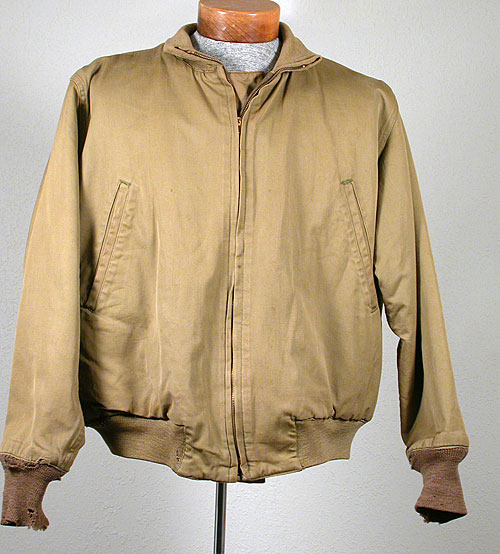
Anyway I've had a quest for the ultimate vintage jacket for a while. Now thanks to ebay I've got an A2 flying jacket, a Schott leatherjacket, a replica tankers' jacket and an original US navy deck jacket. I've decided that my preference is with the last one - which I got a few weeks ago - it's warm, almost waterproof and just about knackered enough. The only thing is that it's slightly too snug a fit over a big jumper.
So I have just extravagantly brought another slightly larger one on ebay - for £15. I'm happy - but the rest of the family think I'm bonkers.
(Disclaimer: Sadly I look nothing like Paul Newman shown wearing the same jacket).
When sad old aging rockers /variety acts - like Rick Parfitt and Francis Rossi of Status Quo - are included in the New Years' Honours List then it is easy to dismiss the whole thing as farcical and comic. At worst yet another instance of our antiquated state - quaint if increasingly irrelevant.
But when Cressida Dick is included - the senior police officer in charge of the Charles De Menizes shooting scandal - there is something downright fucking outrageous going on. The inquiry may have exonerated her from criminal responsibility but it still found that the whole operation was mismanaged - so it is difficult to see in what possible sense an award could be merited.
In fact it is impossible to conclude that this is anything other than the state sticking two fingers up at its critics - in the most insensitive and offensive way it can.
It's ironic that the concept of 'honours' is involved at all: If 'honour' had played any part then Dick should have very publicly fallen on her sword (or possibly truncheon ?) - even now she could have quietly declined the award. The front-line CO19 officer tasked with pulling the trigger at least had the decency to break down whilst giving evidence at the inquiry. Meanwhile Dick who directed the operation from the safety of a command room merely tried to worm her way out of responsibility ... for which she now has the Queens Police Medal.
I saw the Ip Man movie the other night. Strangely I've never been a great fan of the kung fun movies genre but I found it fairly entertaining and true to the underlying myth if not the historical reality of the grandmaster of my branch of Wing Chun.
But in fact as history goes it is very much of the 'Braveheart school'. Both in the liberties taken with the narrative and in the portrayal of Ip Man as a kind of Chinese William Wallace.
It did get me thinking though about the whole question of mythology in martial arts. So much of this comes from the idea of an inspired individual 'inventing' a system or a style. Common sense, and my own experience as a historian, would suggest that this has to be nonsense.
It's a classic case of parallel development: We see all over the world, in all sorts of different societies, in different periods, the evolution of martial arts. Despite an incredible variety of traditions, nuances and idiosyncrasies they are in fact remarkably similar. This is maybe not so surprising given the limited nature of the human armoury. Most of us are equipped with the same number of limbs, hands and feet and there's a finite number of permutations of striking and grappling.This is born out when you look at any martial art in a practical fighting situation - they all start to look increasing similar despite having possibly very different stylised training methods. And interestingly the more experienced the practitioner the less rigidly stylised he is and the greater the apparent convergence with other styles. Based on my own experience - in Wing Chun - in the 'last' form Bil Jee, the principles of the previous two forms are largely discarded - it's been described as learning how to break the 'rules'.
I have to think that martial arts are the product of a sophisticated process of collective evolution over a very long period. They are not delivered complete by a single inspired individual - whether that individual is an itinerant holy man in the fifth century, a sixteenth century Buddhist nun or an exceptional teacher at the time of the Sino-Japanese war.
On top of this general observation, when it comes to Wing Chun history it is doubly difficult to sort the facts from the legend because of its underground nature . Underground because of its association with the nationalist resistance movements opposed to the Quing dynasty. Other styles - Japanese and Korean - carry there own nationalist and political baggage which creates a mythology that obscures their true development.
But we can be sure that in a highly stratified and static environment such as Imperial China the propagators of the system would have to be individuals on the margins of peasant / village society who had the freedom to travel the country. People who could spread influence - and be influenced - wherever they went. This would seem to provide the historic basis for the legends of monks, nuns and the Red Junk Opera .
I'm sorry if any of this is heresy to any of my Wing Chun brothers but our martial arts ancestors were clever and dedicated practitioners - seekers after the elusive perfection of technique - and truth. Enjoy the myths and traditions by all means but we do our respected ancestors an injustice if we elevate these myths to a quasi-religious cult.
Nothing to do with travel. A journeyman was an artisan who had served his time as an apprentice and was so free to sell his labour by the day - or journee. I worked for 25 years in the print and now I am a History teacher. I am a socialist, biker and martial artist. Sometimes I write about these - and other - things.